

Have you ever sat in a meeting where the air feels heavy? I mean difficult conversations are happening, but something important remains unsaid?
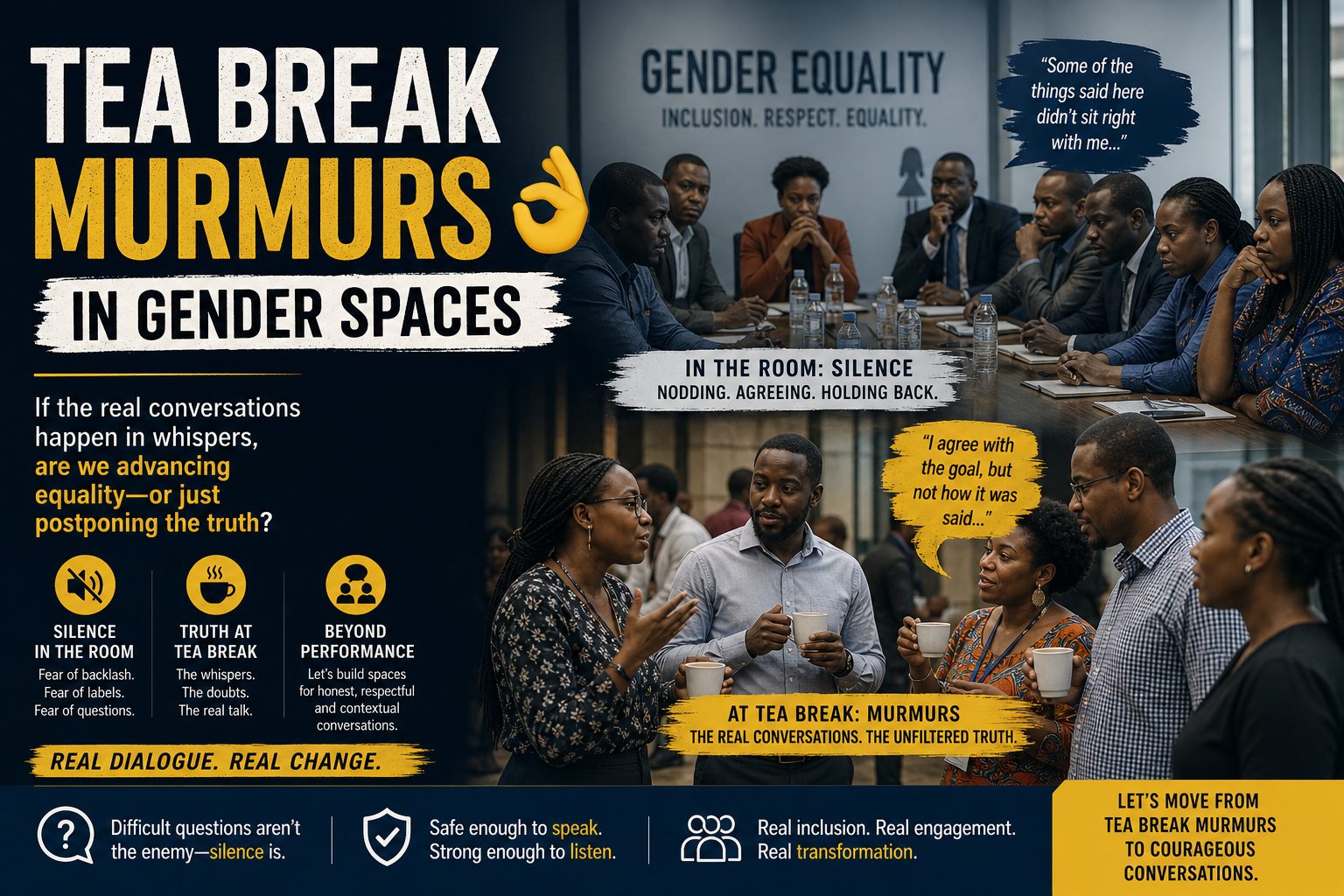
In many gender spaces, discussions around inequality, power, and lived experiences can become intense. People listen, nod, and move on. But during tea breaks, the real conversations begin. Quiet murmurs. Hesitations. Questions that never made it to the microphone.
That silence is worth examining.
The Elephant in the Room
For some men, certain phrases like “men are trash” can feel deeply alienating, even when the intention is to call out harmful behaviors, not individuals. For some women, challenging dominant narratives within these spaces can risk being misunderstood or dismissed.
So both sides often choose silence.
Not because they have nothing to say, but because the cost of speaking feels too high.
- Fear of backlash
- Fear of being labelled “anti-women” or “defensive”
- Fear of professional consequences
- Fear of invalidating someone else’s lived experience
- Fear of being side-lined
- Fear of losing funding
Tea Break Murmurs: Where Truth Surfaces
Ironically, the most honest conversations happen outside the formal sessions.
During tea breaks, you’ll hear:
- “That didn’t sit right with me…”
- “I agree with the goal, but not how it was said…”
- “I wish I could have asked that question…”
- “Do they really want to solve this issue…”
- “I could have said it but I have a family to take care of…”
These murmurs reveal something important: people are engaged – but unfortunately, not included in the way we think they are.
Does Silence Help or Harm Gender Equality?
Silence may keep the peace in the moment, but it often postpones deeper understanding.
When people suppress discomfort:
- Misconceptions go unchallenged
- Nuance is lost
- Engagement becomes performative rather than genuine
- Resources are channelled to the wrong causes
- Status quo remains
- Change does not happen
- Time is lost
And over time, this can create quiet resistance instead of meaningful collaboration. Very common among male practitioners in gender spaces. They chose silence over confrontation.
The Conversations We Avoid
There are difficult questions that many are thinking but few are willing to say out loud:
- How do we call out harmful behaviour without alienating entire groups?
- How do we create space for men to engage without feeling accused?
- How do women express frustration without being policed in tone?
- How do cultural, religious, and personal values fit into global gender narratives?
- How do we ensure elitist conversations don’t overshadow context specific narratives?
Avoiding these questions doesn’t resolve them it buries them.
What Would a Better Space Look Like?
If gender spaces are truly about transformation, they must allow room for:
- Respectful disagreement
- Contextual conversations (cultural, social, and personal realities matter)
- Psychological safety for both men and women
- Curiosity instead of assumptions
- Information sharing before judging
- Less jargon and more realistic conversations
This doesn’t mean diluting the urgency of gender equality. It means strengthening it by making it more inclusive and honest.
Final Thought
The real question is not whether people agree or disagree in these spaces. It’s whether they feel safe enough to speak. Because when conversations only happen during tea breaks, we’re not addressing the issue—we’re just postponing it.